
Planting Moves Ahead While Markets Track Inflation, Trade and More
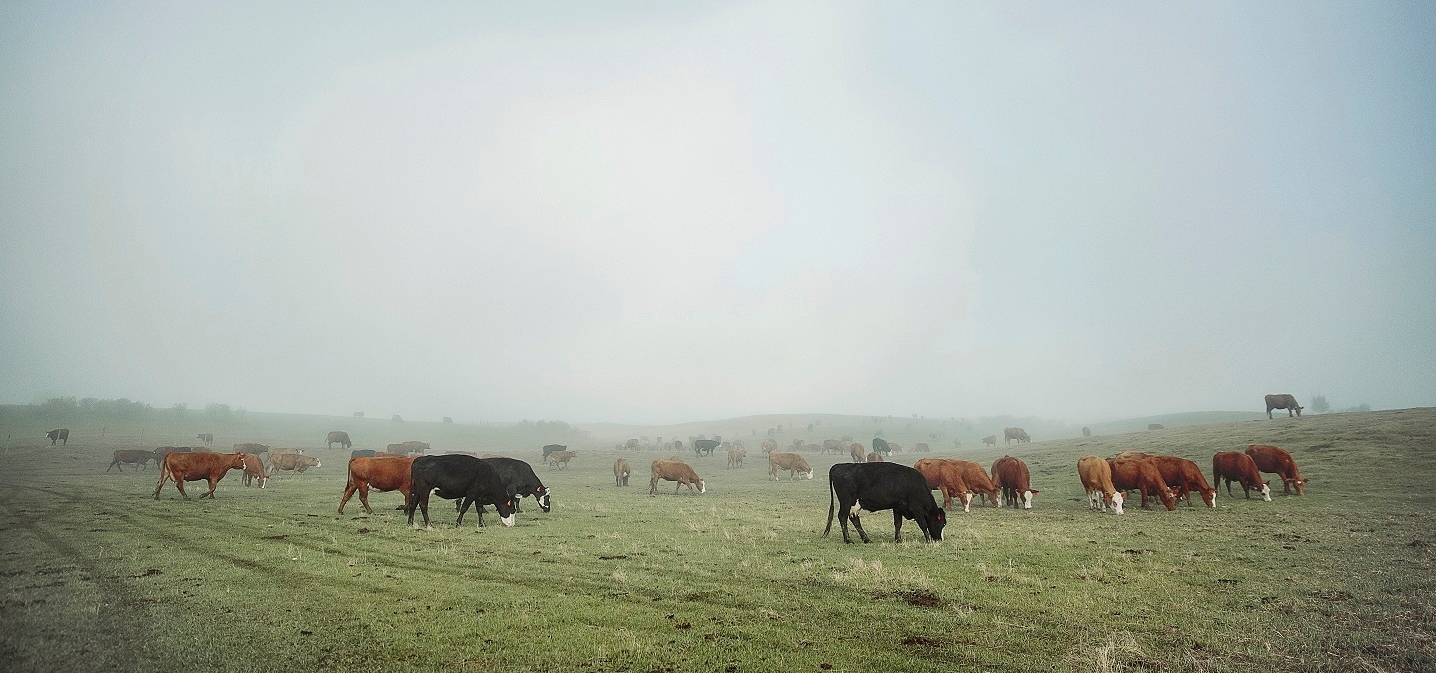
While weather has been a factor for some this spring, nationally, corn and soybean planting progress is well on track. That said, drought and poor crop conditions have been a significant concern for areas outside the Upper Midwest, causing price changes in crops like winter wheat that helped support other commodities, including corn. Meanwhile, oil and fertilizer price concerns along with international trade continued to affect overall economic conditions and were arguably among the biggest drivers of commodity futures fluctuations, especially for soybeans.
For producers and agribusinesses, this combination of strong planting progress, uneven growing conditions and geopolitical concerns reinforces a familiar reality: crop prices are being shaped just as much by global forces as by what’s happening in the field. Input costs, energy markets and policy decisions remain tightly connected to on-farm margins.
In Washington D.C., agricultural policy developments add another layer of uncertainty but also offer a glimmer of progress, as the farm bill has moved further toward passage than at any point since 2018.
An Eventful Early May: Planting Continues, the May WASDE, E15 and Trade Talks
Let’s begin with planting progress. As of the May 11 U.S. Department of Agriculture (USDA) Crop Progress report, corn planting for the major corn producing states was 57% complete, just ahead of the five-year average of 52%. More than a quarter of corn had emerged, despite a chilly, stormy spring across parts of the Upper Midwest.
For soybeans, 49% had been planted, well ahead of the five-year average of 36%, with about one-fifth of acres emerged.
In the Upper Midwest, timely rains helped alleviate many pockets of drought that developed over the winter and early spring. The moisture delayed some planting regionally. However, while moisture slowed some fieldwork, it was not enough to push progress below five-year national averages. Areas of corn, soybeans and spring wheat production show limited dry conditions as of early May.
Outside the Corn Belt, however, conditions tell a different story. Significant drought persists, particularly for winter wheat, where 40% of the crop is rated poor or very poor. That stress has pushed wheat prices higher and, in turn, provided support to broader grain markets. Although conditions are dry, in terms of planting progress, planting for crops from cotton to rice, sorghum, and small grains were also just above five-year average pace, while peanuts lag behind.
This kind of cross-commodity impact is worth watching. When one crop faces supply pressure, it can shift price expectations across other commodities, influencing marketing decisions beyond a single crop.
The May World Agricultural Supply and Demand Estimates (WASDE) marks the first report to include the 2026-27 crop balance sheet. In other words, it’s the first time new crop estimates for both U.S. supply (acres and yield) and demand (domestic use and exports) are included in this important report. Because of this, the May WASDE can be a market mover. Here’s what happened.
On the supply side, production is typically less of a surprise in the May WASDE as acres utilize the March 31 prospective planting numbers, and corn and soybean yield forecasts use the trend adjusted yield projection from the February Outlook Forum. For corn, the forecast planted area of 95.3 million acres, if realized, would be 3.5 million fewer acres than 2025-26. The 2026-27 yield projection of 183.0 bushels per acre is also down from 2025-26, based on a weather-adjusted trend that assumes normal spring planting and a neutral summer growing season, compared to last year’s exceptional corn yield. Both U.S. and global stocks are forecast lower than last year.
On the demand side, the 2026-27 U.S. corn outlook reduces total use, with lower domestic use and exports. However, the U.S. remains the dominant global exporter in this forecast, and part of the year-over-year export decline reflects last year’s exceptional pace. Taken together, the 2026-27 forecast shows ending stocks down and slightly higher expected prices. Old crop corn remains at $4.15 per bushel, while new crop 2026-27 corn is higher at $4.40 per bushel.
From a domestic demand perspective, one unresolved factor at the time of the WASDE, and at the time of writing this article, is the future of year-round E15, a fuel blend of up to 15% ethanol and 85% gasoline. As a result, no year-over-year changes to ethanol use were made in the WASDE. After the WASDE, a standalone E15 bill in the U.S. House of Representatives was passed the following day, but E15 faces headwinds in the Senate.
For soybean supply, the prospective planting acres estimates from March are incorporated into this report, along with yield estimates, resulting in the same planted acres estimate of 84.7 million acres and 53.0 bushels per acre. Recall that the prospective planting survey timing may not have fully captured additional corn to soybean acreage shifts as a result of March fertilizer and energy input increases that affect corn more than soybeans. It’ll be important to watch how this develops in the June 30 Acreage Report.
Things are a little more interesting on the soybean demand side. The 2026-27 outlook for U.S. soybeans shows higher crush and exports, and this increase in use resulted in higher forecast prices. Demand for soybean crush is expected to remain strong, driven by favorable margins on soybean oil as a biofuel feedstock. This is supported by EPA Renewable Volume Obligations (RVOs) for 2026 and 2027, along with higher energy prices. USDA also predicts exports will increase year-over-year for 2026-27, partially because of reduced exports to China in 2025-26.
Soybeans saw a notable increase in the WASDE forecast farm price, aligning with recent gains in futures and cash prices. Old crop soybean price increased from $10.30 in April to $10.40, while new crop 2026-27 soybean price is much higher at $11.40 per bushel.
After multiple delays, the long-anticipated summit between President Trump and Chinese President Xi Jinping will conclude on May 15, bringing soybean markets—as well as other agricultural exports—back into focus in the context of U.S.-China trade. Earlier postponements of this important trade meeting had added uncertainty to the outlook for both the 2025-26 and 2026-27 soybean exports.
While the meeting did not result in a sweeping trade agreement, it did signal a continued pause in tariff escalation and a willingness from both sides to keep trade channels open. Notably for agriculture, Chinese officials indicated plans to purchase of U.S. agricultural products, including soybeans and beef, reinforcing the importance of export demand in the current outlook.
Soybeans remain especially sensitive to developments in the U.S.-China relationship, as China is the world’s largest soybean importer and a major source of demand for U.S. supplies. With 2026 shaping up to include more soybean acres than 2025, continued demand, particularly from China, will be essential to supporting higher prices.
One notable surprise from the May WASDE wasn’t in corn or soybeans, but in winter wheat. USDA sharply cut winter wheat production and tightened the wheat balance sheet, triggering limit-up trading in winter wheat futures markets. This also supported spring wheat prices and provided an overall lift to grain and oilseed markets in the immediate aftermath of the WASDE. However, some of these gains were then lost later in the week as the market digested other news, including the trade summit.
Proteins still hot
The May WASDE raised the 2026 red meat and poultry production forecast from April, largely reflecting higher pork, broiler and turkey output offsetting lower beef production. Cattle remain the clear standout. USDA lowered its 2026 beef production forecast and raised the annual steer price forecast to $249.66 per cwt from $241.66 in April, underscoring how tight cattle supplies remain. Broiler production was also raised, though the annual broiler price forecast was trimmed modestly to 121.9 cents per pound. Dairy improved month to month as well, with the 2026 all-milk price forecast increasing to $21.25 per cwt from $20.50 in April.
The first look at 2027 estimates for red meat and poultry largely followed 2026 patterns, with beef continuing to be forecast tight. However, additional White House actions reportedly under consideration to lower beef prices had not been released as of the May WASDE and could affect cattle and beef markets if they move forward.
The 2026 farm bill moved forward
The U.S. House of Representatives passed its version of the farm bill on April 30 in a bipartisan vote. This represents a significant milestone, moving key priorities for agriculture and rural communities one step closer to becoming law. While the process for the farm bill to become law is far from complete, this is the furthest a farm bill has progressed since the 2018 Farm Bill’s passage.
As mentioned earlier, E15 was not included in the House passed version, but progress continues on a standalone version that passed out of the House on May 13. Next up for the 2026 Farm Bill and the E15 bill is the Senate. Senate Agriculture Committee Chair John Boozman has indicated the committee will release its farm bill text in the coming weeks, not months.
Hot inflation leads to rates taking a pause
Moving away from agricultural fundamentals to the broader economy, let’s focus on interest rates. The Fed’s primary decision drivers are maximum employment, measured by labor market conditions, and price stability measured by inflation.
The May Bureau of Labor Statistics Job Situation report showed a labor market that continues to be unusually resilient. The current dynamic has been described as a “no-fire, no-hire” market, though that label may oversimplify broader economic conditions. The nonfarm unemployment rate for April was unchanged from March at 4.3%, while nonfarm payrolls increased by 115,000. Revisions to the prior two months resulted in 16,000 fewer jobs than previously reported, but overall job growth remains steady despite the adjustment. This suggests inflation remains the more immediate concern.
So how elevated is inflation? Given geopolitics, disrupted global trade and rising energy prices, it was elevated, but not dramatically so. The Personal Consumption Expenditures (PCE) price index measures the prices consumers pay for a broad range of goods and services and is the Fed’s preferred inflation gauge. Core PCE strips out food and energy prices to give a better sense of underlying inflation trends, since those categories tend to be more volatile, as we’ve certainly seen this spring. In March, core PCE rose 3.2%, but higher energy costs helped push headline inflation even higher. Headline PCE inflation rose 3.5% in March from a year earlier. Energy goods prices alone rose 20.9% from February.
The April 28-29 Federal Open Market Committee (FOMC) meeting brought little surprise, as the Fed held its target rate unchanged at 3.50% to 3.75%. More notable was the division beneath the surface: three FOMC voters agreed on leaving the rate unchanged but dissented over language seen as leaving the door open to future rate cuts. While another voter dissented over preferring a cut now. With inflation still elevated and energy prices adding fresh uncertainty, the Fed ultimately signaled patience rather than urgency. Fed Chair Jerome Powell also acknowledged Kevin Warsh’s advancement out of the Senate Banking Committee, the next step in the transition to new Fed leadership. On May 13, the full Senate confirmed Warsh’s nomination, meaning the next FOMC in June will be with new Fed Chair Walsh.
Longer-term interest rates have remained elevated from March into May, with the 10-year Treasury yield around 4.5% on May 14. Markets continue to scale back expectations for Fed rate cuts and price in firmer inflation risk. Earlier this year, investors anticipated more easing in 2026. Now, higher energy prices and broader uncertainty have made that outlook less certain. In practical terms, markets have shifted from assuming lower rates ahead, and that has kept pressure on bond yields and some variable borrowing costs. In summary, expectations of rate changes are now flat for the duration of 2026.
Oil prices and geopolitics remain volatile, so ultimately, only time will tell when it comes to energy-related inflation, which of course includes not just fuel but fertilizer and other related products as well.
The information provided is accurate to the best of the author’s knowledge at time of publishing. It is presented “as is” with no guarantee of completeness, accuracy or timeliness, and without warranty. The information is educational in nature and not investment, legal, accounting, tax or other advice of any kind.